
Turning Trash into Treasure
The Pfand Game

So we found a new game.
Germany — and therefore each individual German — is very exact about recycling. This isn’t a casual eco-friendly choice; it’s a high-stakes civic duty enforced by the watchful eyes of the neighborhood. Our thoughtful landlord, clearly questioning our recycling agility, abruptly handed us thick black garbage bags on move-in day to help smuggle out our errors.
Garbage collection here is a rainbow of possibilities, literally. There’s the Blue or Green bin specifically for paper. The brown “Biotonne” or “Organics Bin” is reserved for food waste. Glass gets hauled down the street to your nearest glass collection point where you drop it into the color-corresponding hole for a satisfying CRASH. The “Yellow Bag” or “Gelber Sack” is a special issue transparent yellow bag to collect plastic and metal. And to hide all of our newbie mistakes, “Black Bin” or “Restmüll” is for the miscellaneous remains.
But there is one quirky exception: “Pfand”.
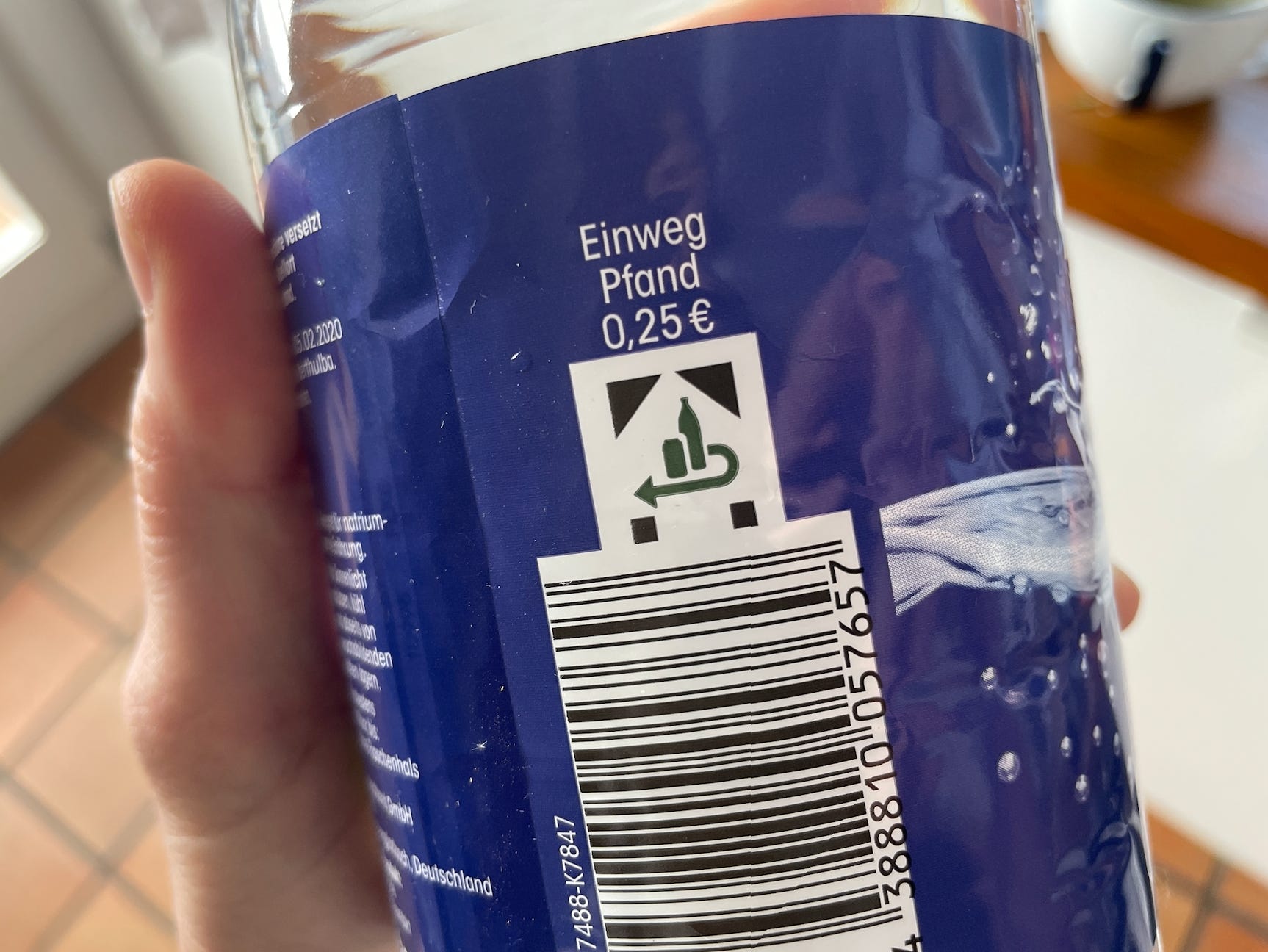
Here in Germany, when you purchase certain beverages, you are required to make a “Container Deposit” — or “Pfand”. Later, you may exchange your emptied, unharmed recyclable containers to the store for a deposit refund.
It sounds simple, but it quickly becomes an obsession. You too might start hoarding trash like a squirrel collecting nuts. For a glass beer bottle, it’s typically 0.08€. A small plastic juice bottle might be 0.15€. For most beer cans or water bottles, it’s often 0.25€ per item. Don’t judge the mess; that trash piling up in the corner is actually a savings account.
So instead of crushing cans at home, we lug our prized collection of perfectly rinsed beverage containers to the supermarket and feed the hungry “Pfandautomat” machine. When the temperamental machine is satisfied, it belches out a triumphant reward — in the form of a grocery store credit receipt.


We aren’t alone in this ritual; DW reports a container return rate of 98% nationwide. While sipping from a glass beverage, you might observe the etched sides of a 12 year old reusable bottle that has enjoyed many lives thanks to this program.
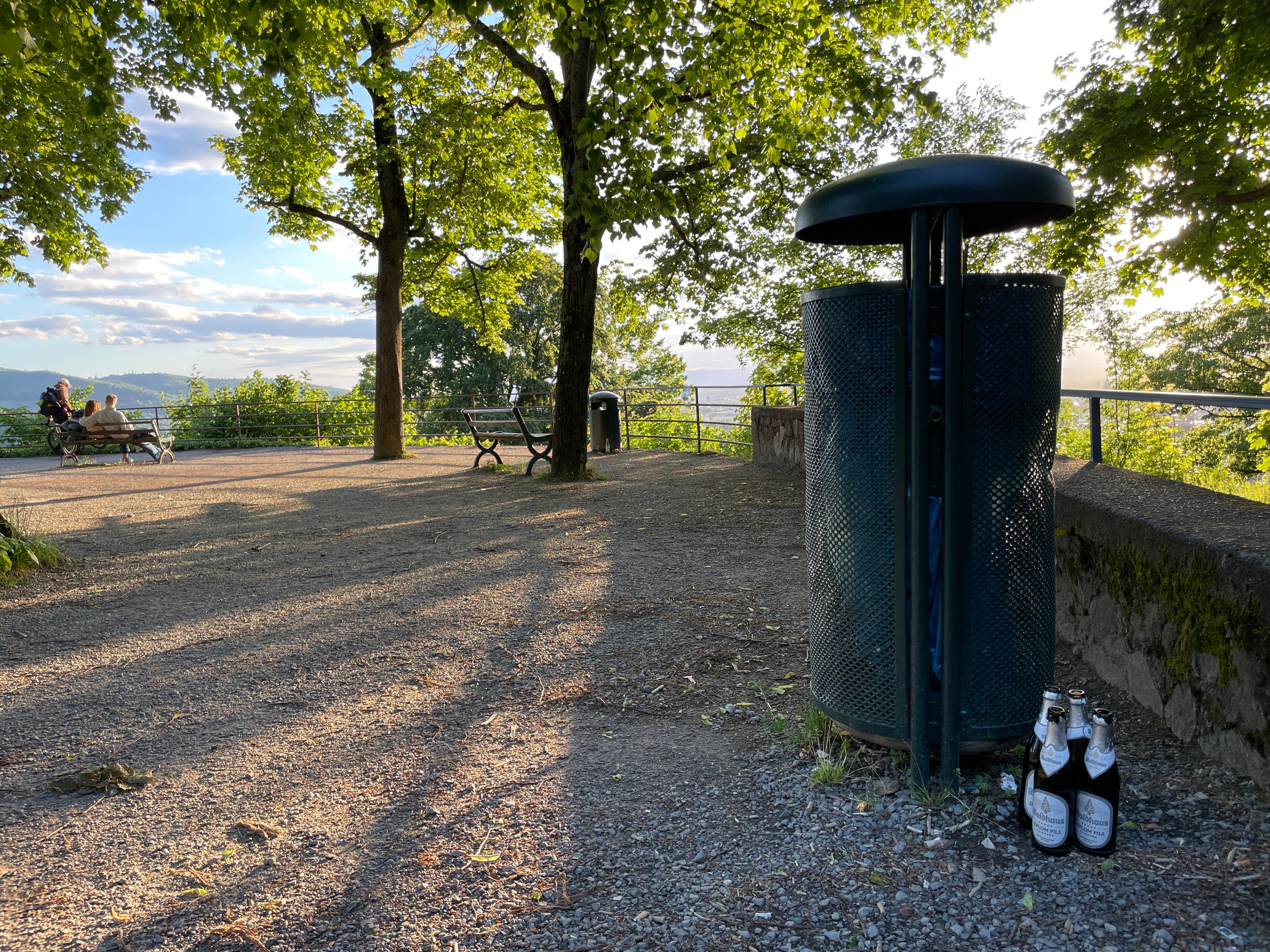
What’s more bizarre? Leaving your recycling scattered at the base of a public trash bin is a philanthropic act of social justice.
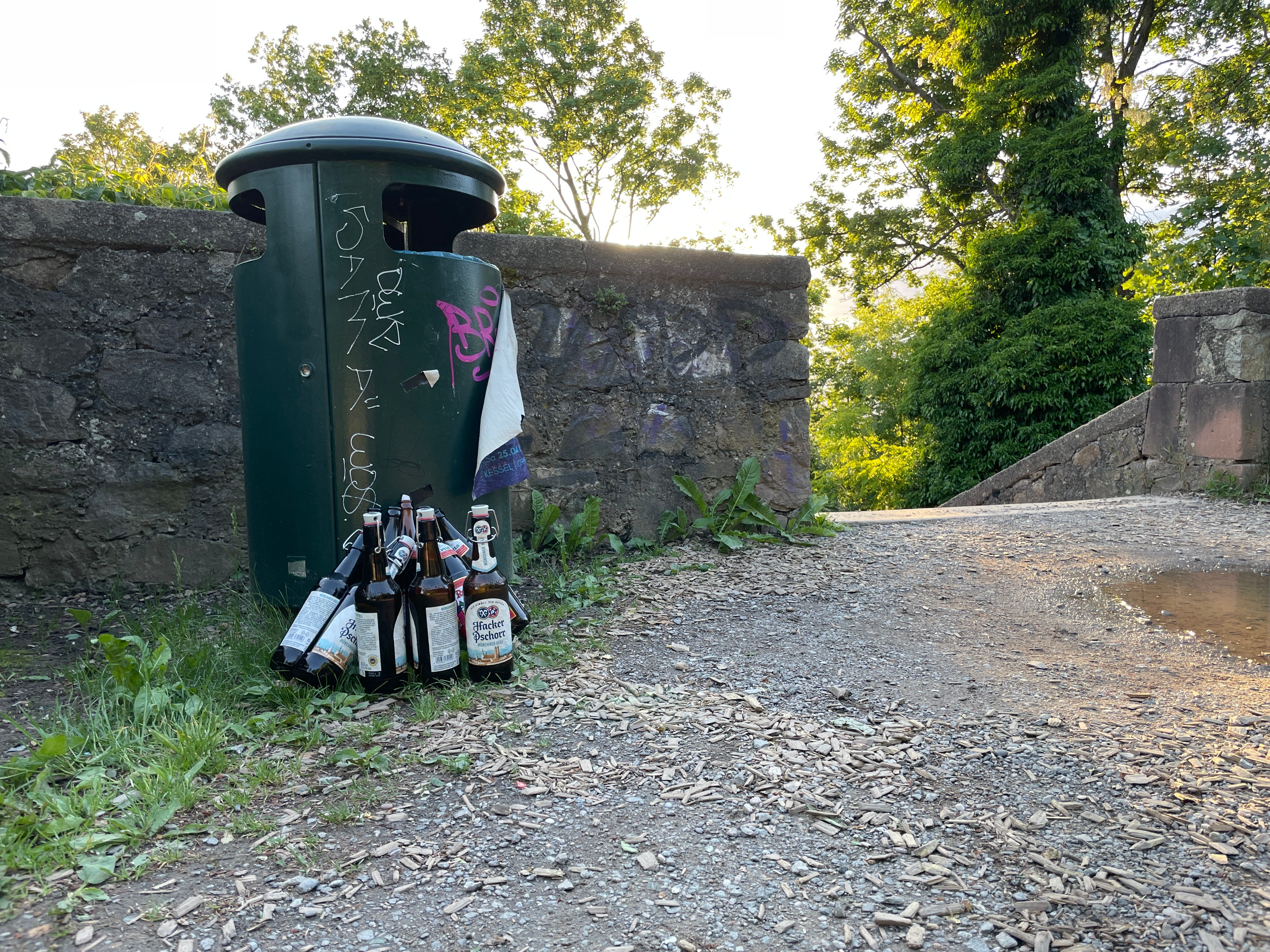
While we were lounging in the park with friends this weekend, an unfamiliar person approached. In the USA, this would almost certainly be a solicitation or an uncomfortable confrontation to ask for money. In contrast, this kind gentleman asked for the honor of throwing away our empties.
No littering here! All across town, you can see the evidence of these specialized street cleaners at work. Any pile of glass and plastic vanishes rapidly to their rightful recycling facility.
“Pfand” collection is so common, that some public garbage receptacles are designed with a special spot to safely stow prized containers until the next collector stops by. Almost to highlight the point, while I was snapping photos for this post, I snapped one picture of a can on the specialized container shelf (see below). Before I could even consider a second photo, a gentleman was already rushing over to grab the object out of my frame.


The Pfand Game
Ok, but what’s the game? Here are the rules:
Save up your “Pfand” containers.
Return them into the “Pfandautomat” for grocery store credit.
Wander around the store to find tasty treats that total up to exactly match the credit — to the cent. No digging pennies out of your pocket! This is a math test in action.
The goal? To slide your guilty treats across the checkout counter, hand over your “Pfandbon” credit, and hold your breath as the cashier’s register hits an absolute, beautiful €0.00.


Luckily, tax is included in the marked price, so this game is way easier than it would be in the USA. Last week as “date night”, we enjoyed two “Pfand”-funded off-brand chocolate bars. This week we celebrated with a couple of “Laugenstange” or fresh long lye pretzels.
What would you buy with your Pfand money?
A bonus quote from Karl:
“So… gummy bears are made from gelatin.
And that gelatin is usually made from pork skin and bones.
So why aren’t they gummy PIGS?”
Thanks for reading!
That’s such a big improvement over how we do it in the U.S.